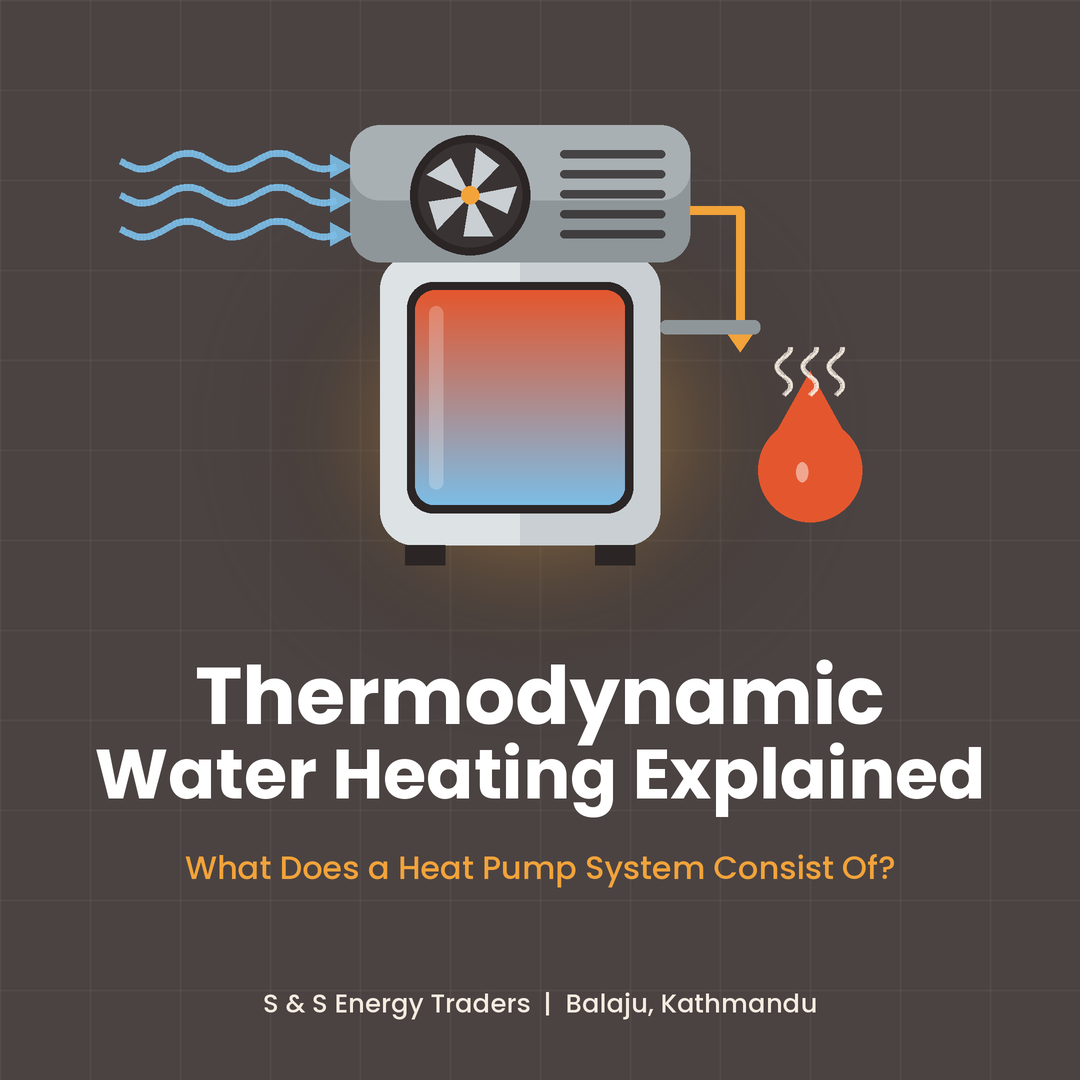
What Does a Heat Pump System Consist Of ?
Thermodynamic Water Heating Explained
A heat pump water heater may look like a simple storage tank or outdoor AC compressor on the outside, but inside, your water is heated using advanced heat-transfer technology. Instead of creating heat directly through energy-intensive electrical resistance coils, a heat pump absorbs free thermal energy from the surrounding air and transfers it into your water supply. High-efficiency systems can save up to 70% to 78% on electricity compared to traditional electric geysers.
This guide breaks down the main internal components of a heat pump system, walks through the operational stages in order, outlines the primary system types, and explains the key features and maintenance needed to keep your system running smoothly.
The Main Parts Inside a Heat Pump System
A residential or commercial air-to-water heat pump combines mechanical refrigeration, thermal transfer, and digital control components:
Evaporator Coil & Intake Fan: Draws in surrounding ambient air and extracts atmospheric heat energy.
Compressor Unit: The engine of the system that pressurizes the refrigerant, multiplying its temperature significantly.
Condenser / Heat Exchanger: The primary transfer vessel where intense heat from the pressurized refrigerant is transferred into the water stream.
Expansion Valve (Metering Device): Depressurizes and cools the refrigerant liquid before it loops back to the evaporator coil.
Insulated Storage Tank: Built with durable anti-corrosion inner lining to keep hot water stored safely with minimal standby heat loss.
Eco-Friendly Refrigerant Circuit: Closed-loop piping utilizing high-efficiency, eco-friendly refrigerants (such as R290 or R134a) to move heat energy.
Auxiliary Heating Element: Backup electrical booster ensuring instant hot water output even during severe cold spells.
Control Board & Digital Display: Manages heating cycles, tracks temperatures, and runs smart scheduled operations.
Safety Relief & Protection Valves: Built-in safeguards preventing excess pressure, overheating, and current leakages.
Know Your Heat Pump System Type First
Understanding the different physical configurations helps you select the right setup for residential homes, apartment complexes, hotels, or commercial facilities:
All-In-One Integrated Systems: Combines the heat pump unit directly on top of the insulated storage tank into a single floor-standing unit. Ideal for utility rooms, basements, or covered rooftops.
Split Heat Pump Systems: Features a separate outdoor compressor unit connected via insulated refrigerant lines to an indoor hot water storage vessel. Perfect for minimizing operational noise indoors.
Commercial & High-Capacity Modular Units: Heavy-duty, high-kilowatt heat pumps engineered to supply thousands of liters of hot water per hour for hotels, hospitals, and industrial facilities.
How a Heat Pump Works, Stage by Stage
Here is how heat energy moves continuously through a closed thermodynamic loop to heat your water:
Stage 1: Ambient Air Heat Absorption
How it works: A quiet intake fan pulls surrounding air across the evaporator coil.
What happens: Cold liquid refrigerant inside the coil absorbs natural heat energy from the air, causing the refrigerant to evaporate into a warm gas.
Stage 2: Refrigerant Compression
How it works: The high-efficiency compressor draws in the warm refrigerant gas and compresses it under intense pressure.
What happens: Compressing the gaseous molecules rapidly elevates both pressure and temperature, producing intense heat energy.
Stage 3: Thermal Exchange to Water
How it works: The hot, pressurized refrigerant enters the condenser coil surrounding or inside the water vessel.
What happens: Heat transfers directly from the hot refrigerant into the cold domestic water supply, raising the water temperature up to 70°C–75°C.
Stage 4: Expansion & Loop Reset
How it works: Shedding its heat causes the refrigerant to cool and condense back into liquid form before passing through the expansion valve.
What happens: The expansion valve expands the liquid refrigerant, dropping its pressure and temperature so it can begin absorbing atmospheric heat again.
Smart Features That Enhance Performance
Modern heat pump systems incorporate automated smart functions to optimize efficiency and maintain hygiene:
Automatic Weekly Disinfection Cycle: Periodically elevates tank temperature to eliminate bacteria and safeguard water quality.
Wide Ambient Temperature Operation: Operates effectively across extreme weather conditions, drawing atmospheric heat even in freezing temperatures (from -20°C up to 45°C).
Multi-Mode Control: Allows switching between Eco (Heat Pump only), Smart/Hybrid, and Quick Boost (Auxiliary Heating) modes based on hot water demand.
Whisper-Quiet Operation: Sound-dampened fan blades and insulated compressor jackets maintain low operating noise levels (as low as 42.5 dB).
Anti-Corrosion Tank Coating: Specialized internal linings prevent scale build-up and rust in tough water environments.
Maintenance: Keeping Your System Working Efficiently
A heat pump requires minimal maintenance to maintain maximum Coefficient of Performance (COP):
Air Filter & Evaporator Coil Cleaning: Inspect and clean every 3 to 6 months to ensure unobstructed airflow.
Condensate Drain Inspection: Check condensation drainage channels annually to prevent water pooling.
Anode Rod & Vessel Check: Inspect internal sacrificial anode rods every 1 to 2 years to protect against corrosive water minerals.
Annual Technician Service: Have a qualified technician inspect electrical connections, refrigerant pressure levels, and safety relief valves.
Signs that it needs service: Decreased hot water output, unusual compressor noise, error alerts on the display panel, or an unexplained spike in electricity usage.
Thermodynamic Water Heating Explained